


Your Faith Journey with EWTN
As we deepen our relationship with the Eternal Word, Jesus Christ, we grow in grace and are transformed by His love and mercy.
c. 673–May 26, 735
Patron Saint of historians, scholars, and English writers
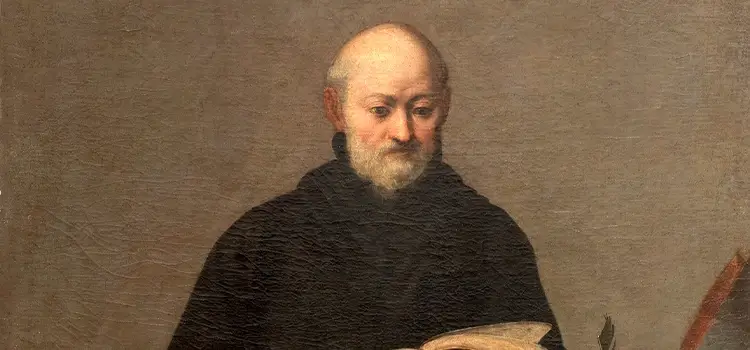
St. Bede the Venerable was among the greatest scholars of the early Middle Ages and a faithful monk whose zeal for learning served the Church for generations.
Born around the year 673 in Northumbria in what is now northern England, Bede was entrusted to the Benedictine monastery of Wearmouth at the age of seven. He later moved to the nearby monastery of Jarrow, where he would spend nearly his entire life.
From an early age, Bede showed intellectual gifts and deep devotion to prayer. Living the Benedictine rhythm of prayer, study, and work, he immersed himself in Scripture, theology, and knowledge. Ordained a priest at 30, he also taught and wrote extensively.
Bede’s writings covered a wide range of subjects, including biblical commentary, theology, history, poetry, and even scientific topics such as astronomy and calendar calculation. His most famous work, Ecclesiastical History of the English People, written in 731, carefully documented the story of the Church in England from the Roman period through his own time. Because of this monumental work, he is often called the “Father of English History.”
Despite his scholarly reputation, Bede lived a humble and quiet life within the monastery walls. He believed that the pursuit of knowledge should always lead to a deeper understanding of God. His works helped educate generations of Christians and preserve the story of the Church during a formative period in its history.
Near the end of his life, Bede continued teaching and writing even as his health declined. On the eve of the Ascension in 735, he completed dictating a translation of Scripture to his secretary and died peacefully while praying to the Blessed Trinity.
Recognized for both his holiness and scholarship, St. Bede was designated a Doctor of the Church by Pope Leo XIII in 1899. His legacy continues to shape the study of Christian history and the life of the Church.
The title “Venerable” reflects the deep respect given to Bede for both his holiness and his learning. According to tradition, after his death, people referred to him simply as Bede. However, when an inscription was being prepared for his tomb, the phrase Hac sunt in fossa Bedae ossa (“Here are the bones of Bede”) did not fit the poetic meter. The word Venerabilis (meaning “venerable” or “worthy of honor”) was added to read “Here are the bones of venerable Bede.” Over time, the title remained attached to his name. The Church widely embraced the designation, recognizing his reputation for sanctity, humility, and scholarship long before he was formally declared a Doctor of the Church.
Completed in 731, Bede’s Ecclesiastical History of the English People is one of the most important historical works of the early Middle Ages. Drawing from letters, oral accounts, and early records, Bede carefully documented the spread of Christianity in England, including the mission of St. Augustine of Canterbury and the development of the English Church. His attention to sources and chronology was unusual for his time and set a high standard for historical writing. Without Bede’s work, much of what we know about early English Christianity would have been lost. The book circulated widely throughout Europe and remained an essential historical reference for centuries.
Although Bede is best known as a historian, most of his works were devoted to explaining Sacred Scripture. He wrote numerous biblical commentaries that were widely used by medieval scholars and clergy. He also composed homilies for the liturgical year, biographies of saints such as St. Cuthbert, and treatises on topics like chronology, poetry, grammar, and the calculation of Easter. His work On the Reckoning of Time helped standardize the dating of years using the system centered on the birth of Christ. Through this wide body of writing, St. Bede helped preserve classical learning while deepening the Church’s understanding of Scripture and theology.

Are you suffering? Sometimes our pain can feel overwhelming—whether it’s physical illness, depression, or watching someone we love struggle with pain and hardship. But we’re not alone. Jesus understands our suffering and walks with us through every trial.
Please sign up for this free eBook, where you’ll find beautiful and comforting Catholic prayers and novenas for healing, strength, and peace—for yourself and for those you love.
Be inspired to follow in the footsteps of the saints. Subscribe to receive the Daily Saint, featuring a brief biography delivered to your inbox each day.
Start now and let the intercession and witness of the saints draw you closer to God.

As we deepen our relationship with the Eternal Word, Jesus Christ, we grow in grace and are transformed by His love and mercy.
STEP 1
We’re here to serve you. Let us help you complete your gift with confidence.

Send a message to Mission Advancement.

Guidance for DAFs, stock, IRA, and more.

Manage your gifts and preferences.


